
What Montana Winters Do to an Asphalt Shingle Roof
QUICK ANSWER: Winter damage to an asphalt shingle roof in Western Montana rarely comes from a single storm. It comes from repetition. Snow melts against a warm roof deck, refreezes at the cold eaves, and forces water back under the shingles. Freeze-thaw swings loosen granules and stiffen the shingle mat. Wind scours exposed slopes and lifts tabs that never fully sealed. The roofs that hold up are the ones built with a ventilated attic, ice and water protection at the eaves and valleys, and shingles installed with the fastening pattern the manufacturer specifies.
A row of icicles hanging off the eaves in February looks like scenery. On an asphalt shingle roof, it is closer to a warning light. Icicles mean snow on the upper slope is melting while the edge of the roof stays frozen, and that meltwater has to go somewhere. On a well built roof it runs off. On a roof with a warm attic and thin underlayment, it backs up under the shingle course and sits there, refreezing every night until it finds a nail hole or a seam.
Western Montana runs that experiment on every roof, every year. Bitterroot Valley homes, houses along the Clark Fork, cabins up toward Seeley Lake, all of them see the same pattern of heavy accumulation, midday sun, and hard overnight freezes. Understanding what that cycle does to asphalt shingles is the difference between a roof that reaches the end of its expected life and one that quits a decade early.
The Winter Cycle That Wears Shingles Down
Asphalt shingles are built from a fiberglass mat saturated with asphalt and surfaced with mineral granules. Each part of that sandwich reacts to cold differently.
Freeze-thaw movement
Water that seeps into small surface cracks expands as it freezes, then contracts as it melts. Repeat that a few hundred times over a winter and hairline separations open into visible splits, most often at the corners of tabs and along nail lines.
Granule loss
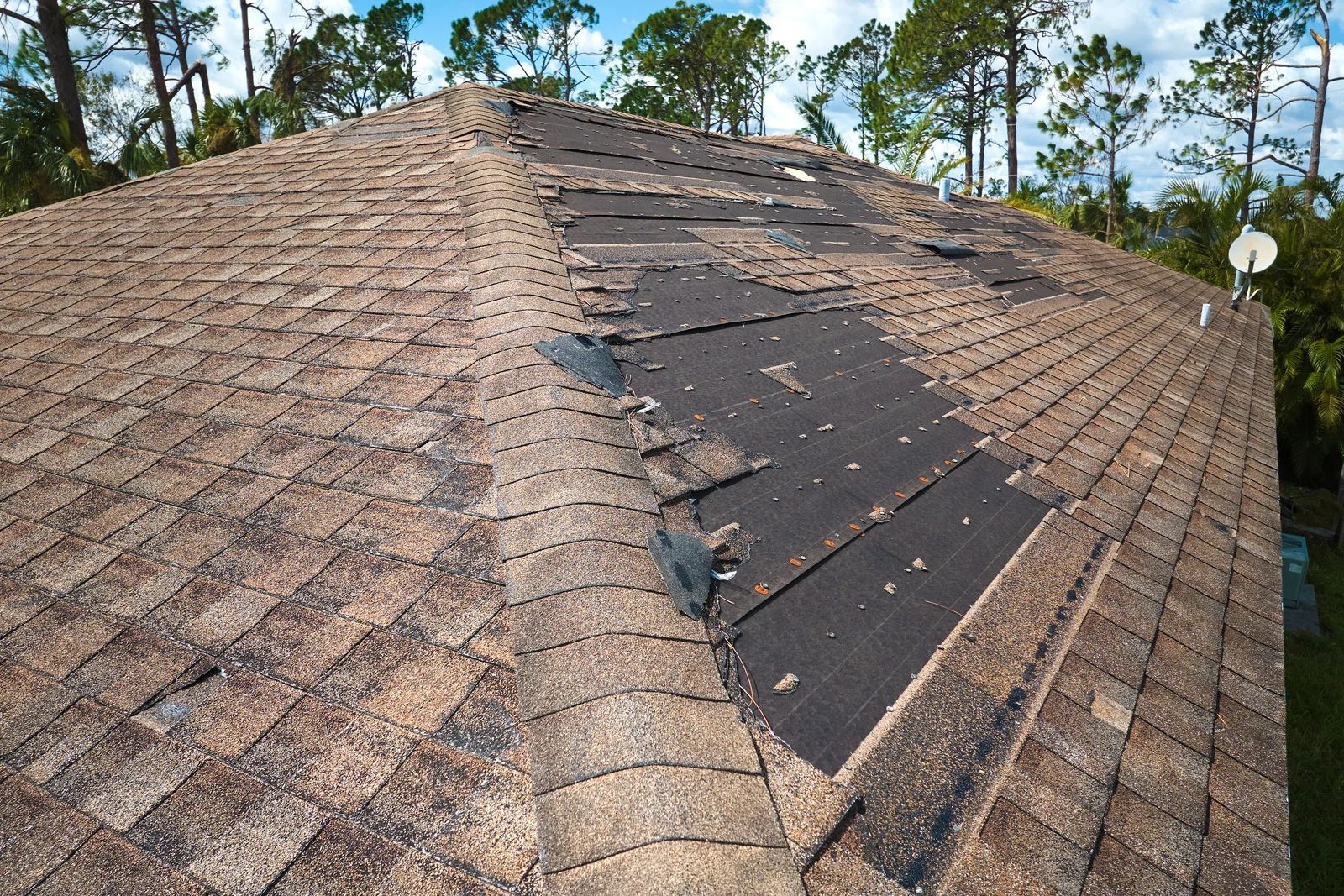
Those mineral granules are the shingle's sunscreen. Ice sliding off a slope, snow being shoveled or raked from the ground, and general abrasion all strip granules away. Once bare asphalt is exposed, ultraviolet light starts breaking it down, and the surface dries and curls faster than the rest of the roof.
Cold-weather brittleness
Asphalt stiffens in low temperatures. A shingle that flexes easily in July can crack under foot traffic or impact in January, which is one reason walking a snow-covered roof to clear it tends to create more problems than it solves.
Wind uplift
Ridgelines and exposed rural lots take steady wind that works at the edge of every shingle. Where a tab has not sealed to the course below, wind gets underneath and levers it up, and the same gap that lets wind in lets snowmelt in.
Snow load and slide
Deep accumulation adds weight the structure has to carry, and when a warm spell releases it all at once, the sliding mass can take gutters, vent boots, and shingle edges with it.
Ice Dams Start Inside the House
Most homeowners look at an ice dam and see a roofing problem. Roofers look at the same ice dam and think about the attic.
Heat escaping from living space warms the underside of the roof deck. Snow sitting on that warm section melts from below. The water runs downhill until it reaches the eaves and the roof overhang, which is not warmed by the house and stays below freezing. There it refreezes into a ridge of ice, and every additional bit of meltwater pools behind that ridge. Standing water on a shingle roof is a problem, because shingles are designed to shed water flowing downhill, not to hold a pond.
Three things reduce it:
Air sealing
Gaps around can lights, bath fans, attic hatches, and top plates let warm indoor air into the attic. Sealing those openings cuts the heat source before insulation ever comes into play.
Insulation depth
Adequate insulation across the attic floor keeps heat where it belongs and the deck closer to outside temperature.
Balanced ventilation
Intake at the soffits and exhaust at the ridge lets cold air wash the underside of the deck continuously. Ventilation only works when both halves are present, and blocked soffit vents are one of the most common findings during an attic inspection in this valley.
WARNING: Chipping ice off an eave with a hammer, hatchet, or shovel almost always damages shingles and flashing underneath, and the damage is not visible until spring. If ice buildup is severe enough to cause interior leaking, address the attic heat loss that created it rather than attacking the ice.
What Sits Under the Shingles Matters as Much as the Shingles
A shingle roof is a system. In snow country, the layers below the surface carry more weight than the brand name printed on the bundle.
Ice and water shield
This self-adhering membrane seals around fasteners and creates a watertight barrier along the eaves, in valleys, and around penetrations. It is the single most useful defense against ice dam backup, and skipping it to save time on an installation is a decision that shows up years later as a stained ceiling.
Synthetic underlayment
Across the rest of the deck, underlayment provides a secondary water barrier and protects the deck during installation.
Drip edge and starter strips
Metal drip edge directs runoff into the gutter instead of behind the fascia. A proper starter course gives the first row of shingles something to seal against, which is exactly where wind uplift begins.
Valley detailing
Valleys carry the most water and the most sliding snow on any roof. How they are woven, closed, or lined with metal determines whether they last.
Deck condition
A tear-off exposes the sheathing so soft spots, delamination, and old water damage can be repaired. Layering new shingles over old hides all of it, and the uneven surface underneath prevents the new shingles from lying flat and sealing evenly.
Not All Asphalt Shingles Behave the Same in Cold
Standard three-tab shingles are a single layer of material with cutouts that form the tab pattern. Architectural, or laminated, shingles bond two or more layers together, which makes them thicker, heavier, and more resistant to wind lift and impact. On the client-facing side that shows up as service life. Three-tab roofs commonly run 15 to 20 years, while architectural shingles are generally rated for 25 to 30 years or more when installed and ventilated correctly.
Impact rating matters here too. Shingles tested to higher impact classes hold together better under falling limbs, sliding ice, and the occasional summer hailstorm, and a tougher mat is generally a tougher mat in every direction.
TIP: Asphalt shingles seal themselves using an adhesive strip activated by sun and warmth. On a late-season installation, that seal may not set until the following spring. A roofer working in cold conditions should hand seal vulnerable areas such as eaves, rakes, and ridge caps rather than relying on the weather to do it.
Reading Your Roof After the Snow Goes
Spring is the honest season for a shingle roof. Once the snow clears, a look from the ground with binoculars tells you a great deal:
Granules in the gutters or at downspout outlets
A small amount is normal, especially on a new roof. Heavy accumulation on an older roof suggests the surface is wearing through.
Curled, cupped, or lifted edges
These indicate the shingle mat has dried out or absorbed moisture and is no longer lying flat.
Missing tabs, especially along rakes and ridges
Wind found a weak seal.
Dark patches or shiny spots. Bare asphalt where granules have been scrubbed off.
Sagging or dipped lines in the roof plane
A structural or deck concern rather than a surface one, and worth a professional look promptly.
Interior clues
Ceiling stains near exterior walls, damp attic insulation, frost on the underside of the deck, or daylight visible at the eaves.
Isolated damage on a roof with years of life left is usually a repair. Widespread granule loss, curling across multiple slopes, repeated leaks in different locations, or a roof past the 20-year mark generally points toward replacement, because patching one section of a worn roof only moves the next failure a few feet over.
Frequently Asked Questions
Should I rake snow off my asphalt shingle roof?
Occasionally, and only from the ground with a roof rake designed for the job. Clearing the first few feet above the eaves removes the snow that feeds ice dams without putting anyone on a slick roof. Do not scrape down to the shingle surface, since the rake will strip granules and catch tab edges. Never climb onto a snow-covered roof to clear it.
Why does one side of my roof always have icicles and the other does not?
Usually because of what is underneath. A slope over a warm, poorly ventilated section of attic melts snow faster than a slope over a cold, well ventilated one. Sun exposure plays a part as well, since south facing slopes shed snow earlier in the day and refreeze at the eaves at night.
Can asphalt shingles be installed during a Montana winter?
They can, with adjustments. Cold shingles are more brittle, adhesive strips will not activate on their own, and fasteners need careful placement. An experienced crew works in smaller sections, keeps material warm, and hand seals edges and ridge caps. When the timeline allows, work scheduled from late spring through early fall gives the roof the best conditions to seal.
How long does an asphalt roof actually last in this climate?
Three-tab shingles commonly reach 15 to 20 years and architectural shingles 25 to 30 years or more, but ventilation, tree cover, snow retention, and storm exposure move those numbers in both directions. A well ventilated architectural roof in a sheltered spot can outlive a poorly ventilated one by a decade.
Is it a problem if my attic has frost on the underside of the roof deck?
Yes. Frost forms when moist indoor air reaches the cold deck, which means warm air is leaking into the attic and ventilation is not carrying the moisture out. When that frost melts it drips onto insulation and framing, and the same heat loss driving it is also feeding ice dams above.
Do gutters cause ice dams?
Gutters do not cause them, but they collect and hold ice once a dam forms, which adds weight and can pull the gutter away from the fascia. Keeping gutters clear in the fall helps water drain during winter thaw cycles instead of pooling and freezing at the roof edge.
Winter Rewards a Roof Built as a System
Winter damage rarely announces itself in a single storm. It accumulates through hundreds of small melts and freezes, each one working quietly at a seam, a nail line, or a tab that never fully sealed. That is why the roofs that hold up in this climate are seldom the ones carrying the most expensive shingle. They are the ones where the attic stays cold, the eaves stay protected, and every fastener landed exactly where the manufacturer drew it.
Havoc Roofing LLC has worked on
asphalt shingle roofs across Western Montana for 10 years, and the same patterns repeat from valley to valley. Ceiling stains trace back to attic heat, missing tabs trace back to a weak starter course, and premature wear traces back to ventilation nobody ever checked. Spring is the season to look, while the evidence is still fresh and the fixes are still small. A roof given that attention usually reaches the age it was sold on.